






















The workplace is experiencing one of the most significant shifts in decades. As hybrid models become a permanent fixture in organizational life, employers are rethinking how they support the health and well-being of their teams. Employees are dividing their time between offices, homes, and remote sites, and their needs are evolving just as rapidly. Wellness programs designed for traditional office environments no longer accurately reflect the realities of a dispersed workforce.
By 2026, the most successful organizations will adopt flexible, technology-supported health strategies that reach employees wherever they work. This white paper examines how hybrid models are transforming corporate wellness and outlines the opportunities that lie ahead. Drawing on Eagle Health’s extensive experience delivering occupational health and wellness programs across federal agencies, this narrative offers a forward-looking perspective on the future of work and health.
I. The New Hybrid Reality
When remote work surged several years ago, many regarded it as a temporary experiment driven by circumstance. Today, hybrid work has become a central feature of organizational identity. Most employees now spend part of their week onsite and part working remotely, creating a rhythm that blends flexibility with structure.
This balance offers real advantages, yet it also presents new challenges. Employees report higher satisfaction with flexible schedules, but they also face increased levels of stress, anxiety, and isolation. Leaders are discovering that hybrid work requires more than a flexible policy; it necessitates a deliberately designed support system that safeguards employee health, fosters a strong culture, and ensures operational continuity.
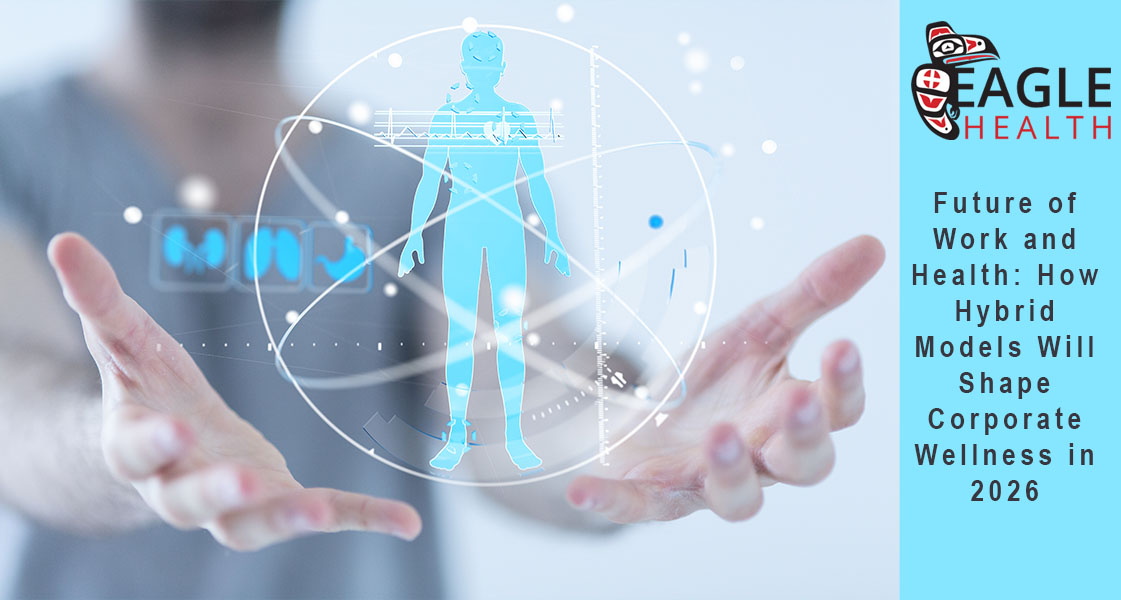
Organizations are also rapidly adopting technology. Virtual platforms, wearable devices, and real-time health insights are providing employees with access to personalized wellness tools that were previously unavailable outside clinical settings. The boundaries of the workplace have expanded, and wellness must expand alongside them.
II. Challenges Emerging in a Distributed Workforce
The hybrid environment introduces complications that were not present when teams gathered in a single location. Communication can feel uneven, health resources may be harder to access, and employees working from home often fall into patterns of sedentary behavior or experience preventable ergonomic strain.
These risks do not stem solely from employee behavior; they often reflect gaps in organizational design. Without structured programs, individuals may navigate wellness on their own, resulting in inconsistent experiences. Some employees thrive in hybrid settings, while others struggle silently.
The regulatory environment also remains a central consideration, particularly for federal agencies and government contractors. Occupational health obligations do not disappear when employees work remotely. Instead, employers must find ways to extend compliance frameworks across varied work environments, ensuring that expectations and support remain consistent.
III. The Future of Corporate Wellness in 2026
Looking ahead, the hybrid workforce of 2026 will require organizations to blend onsite and virtual support into a single, cohesive wellness ecosystem. Employees will expect access to preventive health services, regardless of their workplace. Organizations that recognize this shift early will strengthen employee engagement, improve retention, and reinforce resilience.
The most progressive workplaces will focus on three major areas.
- Integrated Wellness Experiences
Employees will interact with wellness services through a mix of on-site clinics, virtual appointments, digital tools, and community-building events. This integration will provide a seamless experience, enabling individuals to transition between environments without losing support or access.
- Personalized Health Guidance
Health insights will become more tailored. Data from wellness platforms and assessments will help identify emerging risks, enabling earlier interventions. For employees, this personalization will feel like having a dedicated health partner accompanying them through their workweek.
- Stronger Emphasis on Mental and Emotional Well-Being
Mental health will continue to move from the margins to the center of corporate wellness. Workshops, virtual counseling, stress resilience resources, and proactive check-ins will become essential components of a healthy hybrid culture.
IV. Strategies for Organizations Preparing for 2026
As hybrid work matures, employers will benefit from adopting strategies that align with the way employees live and work today.
- Design a Wellness Model That Functions Everywhere
Effective programs will support employees in both home and office settings. Virtual health assessments, flexible telehealth options, and on-site care will work together to create consistent access and early intervention.
- Treat Mental Health as a Foundational Priority
Employees increasingly seek environments where psychological safety is valued. Organizations that provide accessible behavioral health resources will build stronger, more resilient teams.
- Modernize Ergonomics for Hybrid Workstations
Employees need guidance not only for office setups but also for home workspaces that were never designed for long work hours. Remote ergonomic evaluations, education on movement and posture, and strengthening programs can help reduce the risk of long-term injuries.
- Use Data Thoughtfully and Responsibly
Well-structured analytics will help organizations understand the impact of their wellness programs. Insights on participation, risk trends, and health outcomes will guide investments while maintaining strict privacy protections.
- Strengthen Connection and Culture Across Locations
Wellness is not only about individual health; it is also about belonging. Engagement events, recognition programs, and regular communication will help employees feel connected, even when geographically apart.
V. Why Eagle Health Is Ready to Lead This Next Phase
Eagle Health has long supported federal agencies whose missions directly influence the health, security, and well-being of the nation. This work has given our teams a deep appreciation for the complexity of hybrid environments and the level of accountability required when serving federal partners. Over the years, we have developed and managed occupational health programs for various agencies, including the National Institutes of Health, the Food and Drug Administration, the Nuclear Regulatory Commission, the Office of Personnel Management, the Federal Deposit Insurance Corporation, and the U.S. Army.
These experiences have shaped a comprehensive model that brings together clinical expertise, technology-driven wellness tools, and an informed understanding of workforce behavior. Our philosophy is rooted in prevention, early intervention, and consistent care, ensuring that employees receive timely support wherever they perform their work. Whether the workforce is onsite, remote, or distributed across multiple locations, Eagle Health delivers a unified health ecosystem built to strengthen readiness, enhance resilience, and promote sustained well-being.
Conclusion
Hybrid work is no longer an experiment; it is the future. As organizations prepare for 2026, the way they design their wellness programs will shape not only employee health but also productivity, morale, and mission success. The next generation of corporate wellness will be more flexible, more personalized, and more deeply integrated into daily work life.
Eagle Health stands ready to guide organizations through this transition. By combining experience, innovation, and a commitment to employee well-being, we help build work environments where individuals can thrive and organizations can deliver at their highest level.